

ILLUMINATE YOUR MIND. TRANSFORM YOUR LIFE WITH HYPNOTHERAPY.
Experience individual sessions, engaging workshops, and group hypnotherapy programs online, all from the comfort of your home.


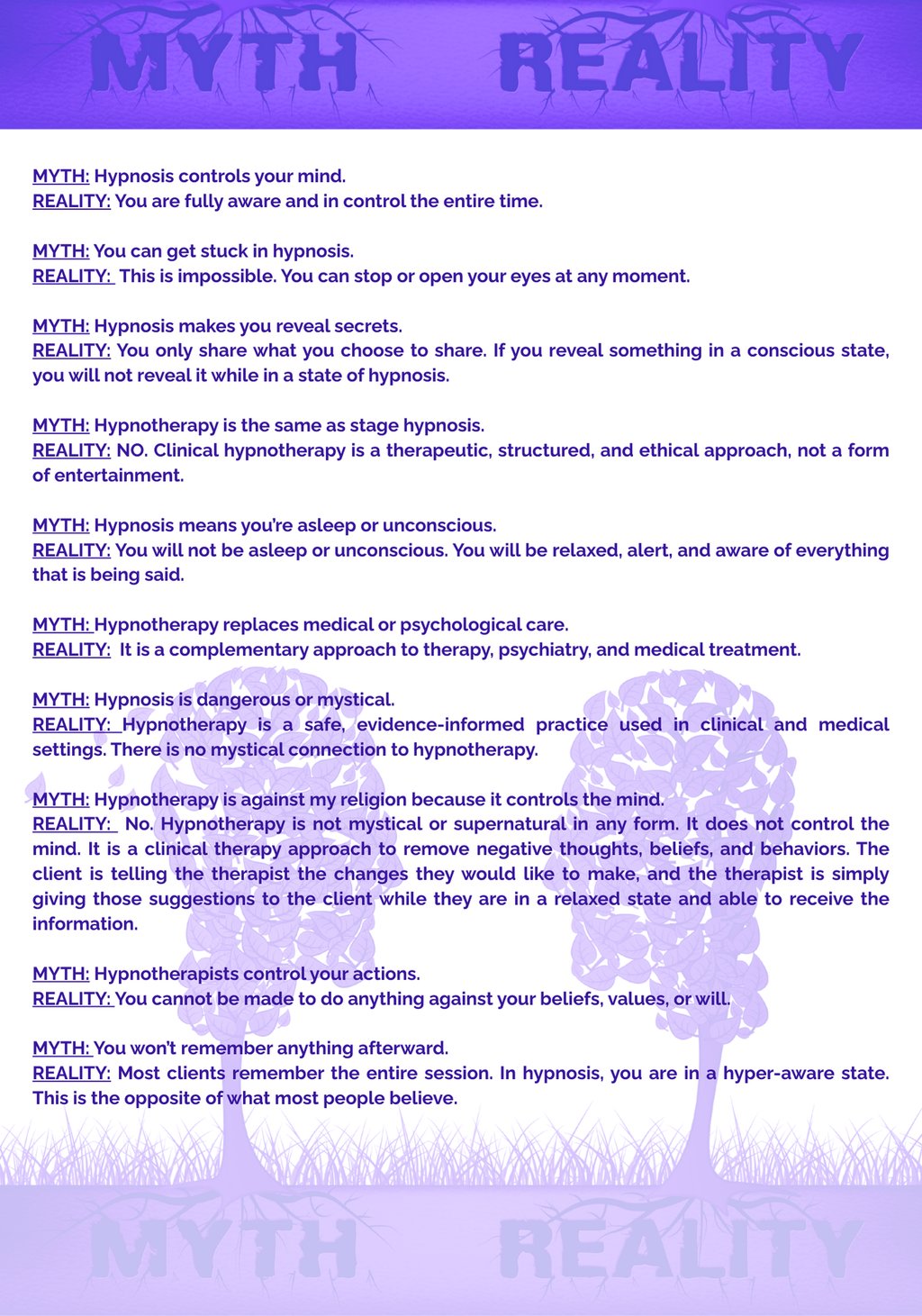
MYTHS VS. REALITY - HYPNOSIS
Is
Hypnotherapy Dangerous?
Understanding the Real Risks of Misconceptions
Many people feel hesitant about hypnotherapy, not because the method is unsafe, but because of misunderstandings shaped by movies, myths, or outdated beliefs.
Below is a clear explanation of the real dangers that arise not from hypnosis itself, but from fear, avoidance, or misunderstanding what it actually is.
The True Risks Come From Misconceptions, Not Hypnotherapy
1. Avoiding a Highly Effective Therapeutic Tool
When people believe hypnosis is “mind control” or “against religion,” they may avoid a technique that can help with:
Anxiety
Trauma recovery
Insomnia
Chronic stress
Phobias
Pain management
Behavioral change
This avoidance can delay healing and prolong suffering.
2. Worsening of Mental or Emotional Symptoms
Without access to calming, evidence-informed hypnotic techniques, individuals may experience:
Increased anxiety
Heightened stress responses
More intense emotional triggers
Trouble sleeping
Difficulty regulating emotions
Stronger avoidance patterns
Hypnotherapy is often a valuable stabilizing tool, and fear blocks that benefit.
3. Stigma Inside Families or Religious Communities
Misconceptions can spread quickly, leading to:
Shame around seeking help
Misjudgment from others
Increased mental health stigma
Reduced willingness to explore therapeutic support
Hypnotherapy is a psychological technique, not a spiritual practice, yet stigma creates unnecessary barriers.
4. Belief in Media Myths Instead of Medical Facts
Hollywood often portrays hypnosis as dramatic or controlling, causing people to fear:
“Being taken over.”
Losing consciousness
Revealing secrets
Being manipulated
None of these reflects clinical hypnotherapy.
Misbelief leads people to dismiss a legitimate wellness tool.5. Trauma Survivors Missing Out on Relief
Many trauma survivors worry that hypnosis means “losing control.”
In reality, it often helps them:Regulate the nervous system
Reduce hypervigilance
Lower reactivity
Build emotional safety
Misconceptions keep survivors from supportive, gentle methods that could ease recovery.
6. Turning to Less Safe or Less Effective Alternatives
When hypnosis is feared, people sometimes seek:
Excessive medication
Unregulated “spiritual” healers
Unhealthy coping habits
No treatment at all
Fear prevents them from accessing safe, structured, evidence-informed care.
7. Barriers to Clinician Collaboration
If the public sees hypnotherapy as “taboo,” licensed professionals may be less likely to recommend it, even when it could help.
This limits integrative care and slows healing.8. Unnecessary Shame or Guilt
Religious misunderstandings may create internal conflict, such as:
“Using hypnosis means I’m not strong in my faith.”
“Hypnosis opens the mind to negative forces.”
Hypnosis is a natural, focused state of awareness, similar to deep concentration. There is nothing spiritual or supernatural about it.
9. Labeling a Safe Method as ‘Dangerous’ Slows Progress
These myths limit:
Access to care
Advancements in clinical training
Research integration
Collaborative mental-health approaches
Misinformation keeps a valuable tool out of reach.
10. Losing the Chance to Build Self-Empowerment
The most significant danger is missing out on a method that helps people:
Gain control over their emotions
Reduce stress
Strengthen resilience
Break unwanted habits
Enhance healing
Improve well-being
Hypnosis enhances personal agency; it never removes it.
The Truth: Hypnotherapy Is Safe, Ethical, and Client-Led
Hypnotherapy is:
A natural state of focused awareness
Evidence-informed and widely used in clinical settings
Compatible with all religions
Safe, non-invasive, and non-manipulative
Always under the client’s controlThe real risk is not hypnotherapy itself.
The risk is letting fear prevent healing through the use of hypnotherapy.


ILLUMINATE YOUR MIND. TRANSFORM YOUR LIFE.
SCHEDULE AN APPOINTMENT
HOURS
By Appointment Only
APPOINTMENT INFO
Virtual Appointments Through
Telehealth or Zoom. HIPAA Compliant.
PHONE
216-816-3957


Copyright © 2026
LUMINA HYPNOTHERAPY
LISA LALLY UMINA, C.Ht
Clinical Hypnotherapist


EMAIL:
info@luminahypnotherapy.com








SUBSCRIBE TO THE NEWSLETTER
Enjoy the latest information on upcoming workshops and events, available only to our subscribers.